Subterranean termite soil barrier treatments address the subterranean foraging patterns of Reticulitermes hesperus, a native pest heavily active in coastal regions such as Ocean Beach and inland clay soils found across…
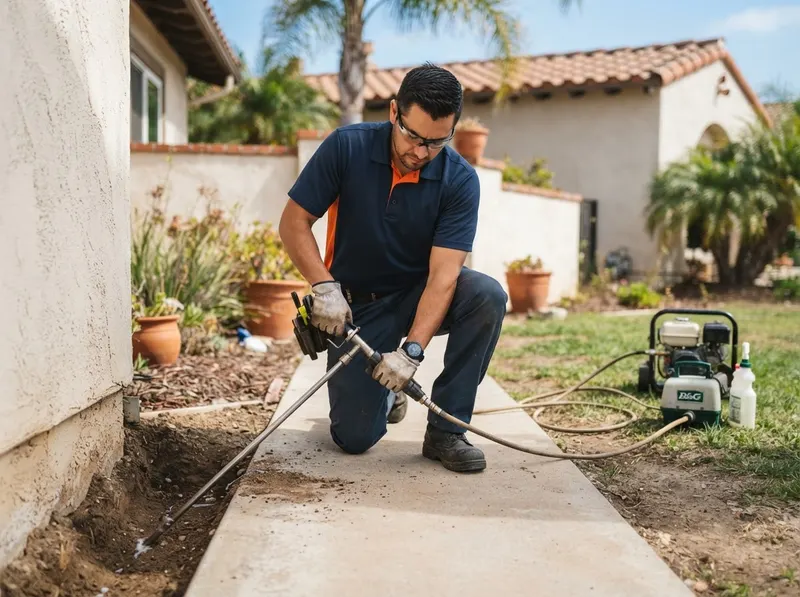
Subterranean termite soil barrier treatments address the subterranean foraging patterns of Reticulitermes hesperus, a native pest heavily active in coastal regions such as Ocean Beach and inland clay soils found across Clairemont Mesa. Unlike drywood termites that live exclusively inside elevated lumber, subterranean colonies reside up to 10 feet beneath the surface and travel into structural studs through exterior concrete pores, slab fractures, and plumbing penetrations. Applying an underground soil barrier establishes an undetectable zone: termites walk through the treated substrate without sensing it, ingest the active agent, and transfer the active compound to the colony through natural grooming behaviors.
A complete subterranean soil barrier treatment requires establishing a physical treatment continuous trench along exterior stem walls, measuring 6 inches deep and 6 inches wide. Where concrete patios, pool decks, or driveways abut foundations in areas like Point Loma or Carmel Valley, application technicians drill vertical holes through the concrete slab at 12-inch intervals to inject liquid chemical at a labeled rate of 4 gallons per 10 linear feet. If an attached patio or enclosed garage prevents outside perimeter trenching, sub-slab injection creates the required continuous curtain without necessitating drywall demolition inside living areas.
Decision-fit considerations contrast liquid soil barriers against topical crawlspace foamings or localized baiting stakes. Baiting stakes require ongoing consumption monitoring over months and do not arrest active chewing immediately, making continuous soil barriers the appropriate choice when subterranean mud tubes are visibly ascending stem walls or floor framing. Conversely, liquid perimeter barriers demand mechanical trenching through garden mulch and drilling through decorative tile; properties with expansive wrap-around exterior slate stone often evaluate the trade-off between drilling visible masonry surfaces versus installing exterior bait stations around foundation perimeters.
Every job gets a firm, written price after a free on-site visit.
Tell us about your subterranean termite soil barrier application job in San Diego and we'll send a clear, written quote, usually the same day.
 Bravion Bug Solutions